

A proposed $15-billion liquefied natural gas development off the coast of Newfoundland has received a major boost, after St. John's-based Fermeuse Energy signed a memorandum of understanding (MOU) to advance the project with Hanwha Group, an industrial conglomerate based in Seoul, South Korea.
The deal "establishes Hanwha as a long-term strategic partner to Fermeuse Energy, supporting the project's development, engineering, financing, shipbuilding, and LNG logistics across the full LNG value chain," Fermeuse Energy (FEL) said in a Jan. 19 release.
Hanwha is also bidding on a multi-billion-dollar contract to build a new fleet of ice-capable patrol submarines for the Canadian military. FEL said the LNG project is "consistent" with the industrial partnerships Hanwha is offering as part of its bid.
"Hanwha is approaching Fermeuse Energy not merely as a service provider, but as a trusted partner committed to supporting the project from concept through execution and commercialization," Sung-chul Eo, president of Hanwha Ocean's Naval Ship Division, said in the release. "By leveraging the combined capabilities of Hanwha Ocean and the broader Hanwha Group portfolio, together with the support of the Korean government, we will contribute meaningfully to the successful realization of Newfoundland and Labrador's LNG potential."
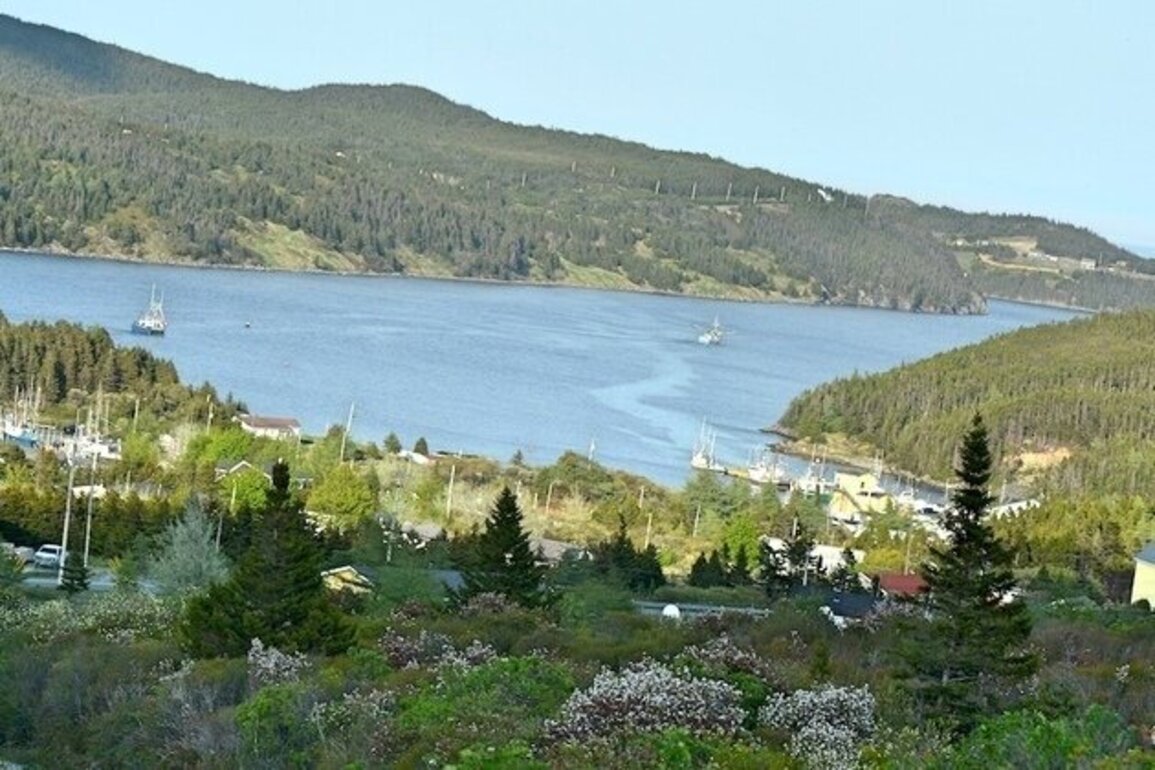
When FEL first announced the project last September, its plan called for a 380-kilometre pipeline to carry gas from the Jeanne d'Arc Basin east of St. John's to a liquefaction facility in Fermeuse, a town of 600 people about 90 kilometres south of the city.
The company said the project would extract about 9.7 trillion cubic feet of offshore gas, about three times the initial estimate for Nova Scotia's Sable Island development, and take advantage of the new Fermeuse Marine Base by "evolving" it into a gas liquefaction hub.
With the supply base already approved, Fermeuse Energy CEO Swapan Kataria said the LNG project would save 12 to 18 months of development time on environmental approvals that are already in place. "Give or take, 54 to 60 months, we should be able to export if we do not get delayed with the regulatory process," he said.
At the time, Kataria told The Energy Mix the project would never have seen the light of day without policy changes announced by Prime Minister Mark Carney.
"Without that, we would not be having a conversation today," he said. "Prime Minister Carney has now started a momentum, started a movement, almost, to build a country," and "I hope he sticks to it, because there are a lot of people like us who committing to put their life and energy and money into building projects in Canada."
Valerie Walsh, who said her family has been in Fermeuse for generations, reached out to The Mix after an initial story on the project went online. She said she'd been using her personal Facebook page to spread the word about the project-and generating a small wave of response from concerned neighbours.
"I'm outraged and so frustrated," she said in early September. "When the story came out, that day I was blindsided and in a rage. I couldn't believe something could be proposed of this magnitude and nobody, literally nobody, knew a thing about it here."
Walsh said the marine base cleared its original environmental assessment when it was meant to be a service depot for offshore oil rigs. "Now this is going to be a pipeline 400 kilometres off Newfoundland," she said. "They'll be bringing the methane or LNG in so far, then when they hit the iceberg section off the coast they're going to dig a trench right up into the middle of Fermeuse Harbour and put the pipe in the trench."
So "it's not a land base anymore," she continued. "It's not a land structure. It's going to be a floating gravity base... Common sense tells me that they're different environmental impacts, and different assessments need to be done now."
Four months later, Walsh said she heard nothing about the MOU until the story began to trickle out in media reports.
"I've been inundated with text messages about it," she said. "People were surprised again, because nobody saw it coming, and there's no information on the ground. But people see it coming back again, and it's bubbling. So I have a list of federal politicians I have to email this afternoon."
The news that a major South Korean business has signed on to the project "is substantial here," Walsh added. "Whether it happens or not, it now puts it into the lane of an extreme possibility," especially because "dangling the jobs carrot is pretty big in Newfoundland."
In online discussions so far, the reaction to the announcement "has been mixed-some are saying the jobs are desperately needed," while "some people are voicing their concerns," Walsh wrote in an email. "That is understandable, and what I suspect FEL and Crown LNG are banking on."
She said she'd also seen "a flurry of messages via text and Facebook from people not wanting a public voice but [who] are vehemently against it."
Hanwha spokesperson Sungsu Ahn did not respond to emailed questions about the company's role in the project, including the duration and rough dollar value of the engagement, whether Hanwha would help line up financing for the project or invest its own funds, and how the deal ties in with its submarine bid.
This week, three students and one professor from Memorial University traced the history and potential impacts of the project in a detailed feature report for The Independent, a community news site based in St. John's. Political science undergrads Grace Fitzpatrick and Seamus MacKenzie said they have family connections to Fermeuse, undergrad Eric Devine traced his roots to nearby Witless Bay, and political science professor Angela Carter is Canada Research Chair in Equitable Energy Policy, based at Memorial.
"Project supporters claim it will bring a number of benefits, notably bringing gas to market," the four authors write. "Residents, for their part, focus more on FEL's claims of jobs and economic benefits. The company's website asserts the project would generate 500 permanent jobs, a significant boost to a community experiencing steep population decline."
The project also connects to a mix of other infrastructure improvements that "speak to residents' longing to rejuvenate their town and bring young people back," the four authors add. "In essence, for some, the project represents a chance for Fermeuse to have a future."
But the article also recounts serious concerns about future demand for LNG exports, including the missing business case for exports from Canada's East Coast. "EU demand is declining as cheaper renewable energy is brought online," the students state. "Asian markets are creating alternatives to LNG or are accessing closer and cheaper supply. Moreover, transporting gas from Newfoundland's offshore is not cost-competitive, given the need for a 350-kilometre pipeline or long-haul LNG tankers."
But there's more certainty about the way LNG projects upend lives and health, while equalling or exceeding the climate impact of coal. In Fermeuse, the article states, the infrastructure "would dominate the harbour, impeding and threatening the crab and other fisheries. Building and operating LNG export facilities can negatively impact surrounding ecosystems by exposing wildlife to toxic chemicals, noise pollution, and habitat disturbances. It would also stifle the town's and region's growing nature-based tourism industry-the 'green tourists' from around the world who currently visit the Southern Shore have no wish to hike alongside an LNG terminal."
It helps us measure & strengthen the impact of our reporting.
Have more to say? Email [email protected]
Source: The Energy Mix