

New Delhi [India], June 8 (ANI): India is believed to have once again slightly expanded its nuclear arsenal in 2025 and continued development of new types of nuclear delivery systems, according to the latest findings from the Stockholm International Peace Research Institute (SIPRI).
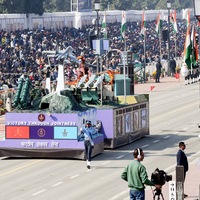
New Delhi's modernisation programme, the SIPRI Yearbook 2026 released on June 8, noted, 'is increasingly focused on developing long-range weapons capable of reaching targets throughout China, although planning also continues to be focused on India's long-standing rivalry with Pakistan.'
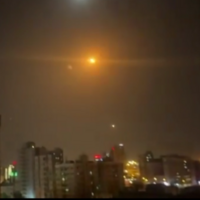
The report, which provides an annual assessment of the state of armaments, disarmament and international security, has described Operation Sindoor as 'an unusually severe military crisis' between the two nuclear neighbours India and Pakistan in May 2025.
The cross-border tensions in May 2025, said the Institute, saw India strike Pakistani air and missile bases 'that are likely to have nuclear-related roles.' However, SIPRI stated that 'both sides took steps to avoid escalation.'
The report further noted that India and Pakistan integrated cyber operations into active military conflict 'for the first time' during the crisis in May 2025, underscoring the changing nature of deterrence and warfare between the two rivals.
India has also retained its position as the world's fifth-largest military spender and the second-largest importer of major arms during the 2021-25 period, according to the report by the Stockholm-based think tank SIPRI.
India's military expenditure reached $92.1 billion in 2025, marking an 8.9 per cent jump from the previous year. India is the world's fifth largest military spender and ranks behind only the US, China, Russia and Germany in defence spending.
SIPRI has also identified 162 countries as recipients of major arms in 2021-25. The five largest recipients were Ukraine, India, Saudi Arabia, Qatar and Pakistan, which together accounted for 35 per cent of total arms imports in the period. India accounted for 8.2 percent of global arms imports, making it the world's second-largest arms importer during the 2021-25 period.
Key findings of SIPRI Yearbook 2026 are that the nine nuclear-armed countries -the United States, Russia, the United Kingdom, France, China, India, Pakistan, North Korea and Israel- are increasingly relying on nuclear weapons as instruments of national power, reversing decades of efforts to reduce the numbers and role of nuclear weapons, even as the risks of miscalculation and escalation are rising.
Of the total global inventory of an estimated 12 187 warheads in January 2026, about 9745 were in military stockpiles for potential use.
SIPRI estimates that India's nuclear arsenal has grown to approximately 190 warheads by early 2026.
Meanwhile, Pakistan, the SIPRI report stated, continued to develop new delivery systems and accumulate fissile material in 2025, suggesting that its nuclear arsenal might expand over the coming decade.
At the start of 2026, nine countries US, Russia, UK, France, China, India, Pakistan, North Korea and Israel- together possessed approximately 12 187 nuclear weapons, of which 9745 were in military stockpiles and considered to be potentially operationally available. An estimated 4012 of these stockpiled warheads were deployed with operational forces, with just over half thought to be kept in a state of high operational alert on ballistic missiles (2100-2200 warheads), the SIPRI report detailed.
'Overall, the number of nuclear warheads in the world continues to decline, but this is only due to the USA and Russia dismantling retired warheads. Notably, the number of warheads being dismantled annually appears to be decreasing and it seems likely that the rate at which retired warheads are dismantled will soon be outpaced by the rate at which new warheads enter global stockpiles,' SIPRI said.
The US and Russia together possess almost 86 per cent of all nuclear warheads and both have extensive nuclear modernization programmes underway. China is also in the middle of a significant modernization and expansion of its nuclear arsenal, which is estimated to have increased from 600 to up to 620 warheads during the year.
The explosive material utilised in nuclear weapons is fissile material, either highly enriched uranium (HEU) or separated plutonium and as per the SIPRI report India and Israel have produced mainly plutonium.
'In recent years, submarine-based nuclear weapon delivery systems have also been proliferating, especially in the four nuclear armed states in the Indo-Pacific,' the report by the Stockholm-based think tank said.
The SIPRI report noted that the number of interstate armed conflicts doubled from three in 2024 to six in 2025 and involved at least 13 countries: Afghanistan-Pakistan; Cambodia-Thailand; India-Pakistan; Iran- Israel/United States; Russia/North Korea-Ukraine; and Congo-Rwanda.
Karim Haggag, Director of SIPRI in his introduction to the report,, stated, 'The most recent decade has fundamentally altered the strategic environment. The distinguishing feature of this current phase of great power competition relates to two overarching drivers: the resurgence of large-scale interstate war between technologically advanced states and the erosion of the United States' alliance frameworks.'
In 2025, the diverse security landscape in Asia and Oceania continued to be marked by intensifying strategic competition between China and the USA, Haggag said. (ANI)